

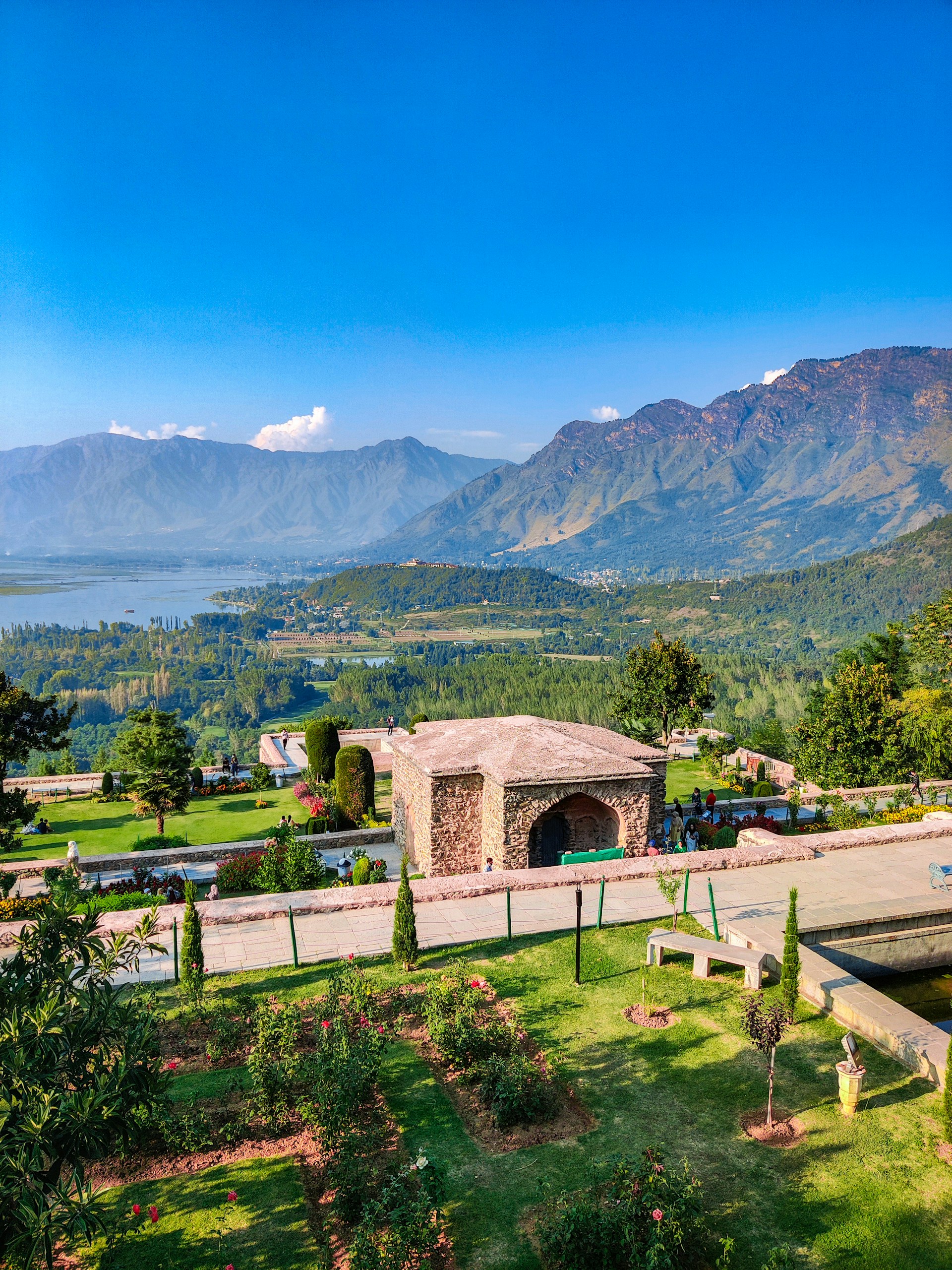
For centuries, the enchanting landscape of the Kashmir Valley has inspired poets, emperors, and travelers alike. Its reputation as “Paradise on Earth” is often attributed to Emperor Jahangir, who famously expressed his admiration for the valley’s beauty. However, this title is not only a reflection of natural scenery. It is also the result of deliberate artistic and architectural intervention by the Mughal rulers, who transformed the region into a series of meticulously designed gardens that embodied their vision of heaven on earth.
The Mughal gardens of Srinagar and its surrounding areas stand as some of the finest examples of landscape architecture in South Asia. Inspired by Persian garden design and adapted to the unique topography of Kashmir, these gardens reflect a harmonious blend of nature, geometry, and spirituality.
Historical Foundations of Mughal Gardens in Kashmir
The Mughal connection with Kashmir dates back to 1586, when Emperor Akbar incorporated the region into the Mughal Empire. While Akbar laid the administrative groundwork, it was during the reigns of Jahangir and Shah Jahan that garden-building flourished.
Jahangir’s personal fascination with Kashmir played a major role in this transformation. He visited the valley frequently with Nur Jahan, whose influence on architecture and aesthetics was profound. These visits were not only about leisure but also about projecting imperial authority. Gardens became symbols of power, refinement, and control over nature.
The Mughals introduced the Persian Charbagh concept, which divided gardens into four symmetrical sections using water channels. In Kashmir, however, this idea evolved into terraced gardens due to the region’s natural slopes. This adaptation resulted in a distinctive style that set Kashmiri Mughal gardens apart from those in the plains.
Shalimar Bagh
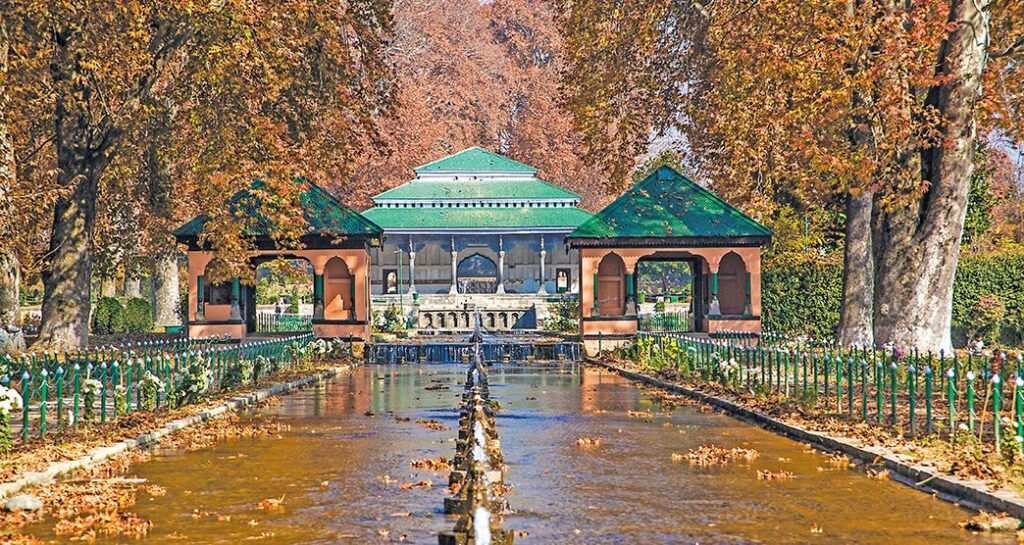
Established in 1619 by Jahangir, Shalimar Bagh was designed as a royal retreat for Nur Jahan. The site is believed to have had earlier historical significance even before Mughal intervention, but it was Jahangir who transformed it into a grand imperial garden.
The layout reflects a structured hierarchy. The lower terrace, known as Diwan-i-Aam, was accessible to the public. The upper levels, including the Diwan-i-Khas, were reserved for the emperor and his inner circle. This spatial organization mirrored the administrative and social order of the Mughal court.
Under Shah Jahan, the garden was further refined with improved water systems and architectural additions such as the Black Marble Pavilion. Shalimar Bagh thus evolved into both a personal and political space.
Nishat Bagh
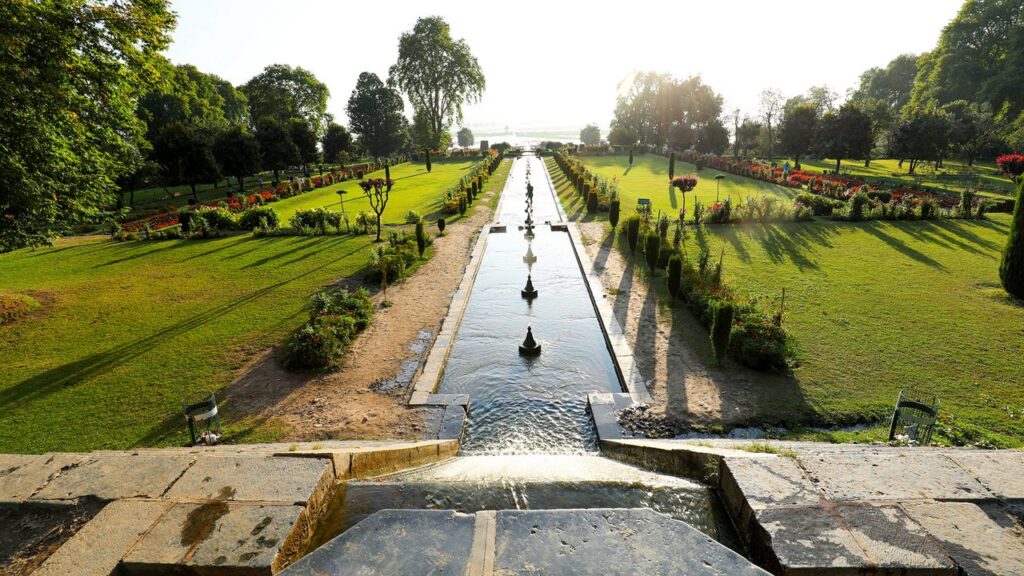
Nishat Bagh, built in 1633 by Asif Khan, represents the influence of powerful nobles within the Mughal court. Located along the banks of Dal Lake and backed by the Zabarwan Mountains, it is one of the most visually striking gardens in Kashmir.
The twelve terraces of Nishat Bagh are often interpreted as symbolic of cosmic order, possibly linked to zodiac signs. The alignment of water channels, terraces, and natural surroundings demonstrates a high level of planning and environmental sensitivity.
Historical anecdotes suggest tensions between Jahangir and Asif Khan over the ownership of the garden, highlighting how such spaces were intertwined with politics and power.
Evolution of Mughal Garden Design in Kashmir
The gardens of Kashmir represent an advanced stage in Mughal landscape architecture. While rooted in Persian traditions, they incorporated local techniques and materials. Water management systems were particularly sophisticated, relying on gravity to maintain a continuous flow through canals and fountains.
The integration of natural features was another defining aspect. Rather than imposing rigid structures, Mughal architects worked with the terrain, enhancing its natural beauty. This approach resulted in gardens that feel both structured and organic.
Key Elements of Mughal Garden Design
Several defining features can be observed across all Mughal gardens in Kashmir.
Water plays a central role. Flowing through canals and fountains, it symbolizes life and continuity. The sound and movement of water also contribute to a calming atmosphere and reinforce the idea of paradise.
Terraces are another essential element. They allow the gardens to adapt to the natural landscape while creating layers of visual interest. Each level offers a different perspective, enhancing the overall experience.
Baradaris, or open pavilions, are designed to provide shade and ventilation. These structures allow visitors to engage with the surroundings while remaining protected from the elements.
Vegetation is carefully selected and arranged. The presence of Platanus orientalis, along with fruit-bearing trees and seasonal flowers, enhances both the aesthetic and sensory appeal of the gardens.
Cultural and Historical Significance
The Mughal gardens of Kashmir are enduring symbols of an era that valued harmony between nature and design. They reflect the Mughal pursuit of balance, beauty, and meaning. These gardens were not only places of leisure but also spaces for governance, intellectual exchange, and spiritual reflection.
Today, they are included in the UNESCO World Heritage Tentative List, recognizing their global importance. They continue to attract scholars, architects, and visitors who seek to understand the legacy of Mughal innovation.
The Mughal gardens of Kashmir stand as remarkable examples of how landscape can be transformed into a cultural and philosophical statement. From the royal elegance of Shalimar Bagh to the scenic grandeur of Nishat Bagh, each garden tells a story of vision, power, and artistic mastery.
Their history reveals a narrative of adaptation and creativity, where Persian ideals were reshaped to suit the unique environment of Kashmir. Even today, these gardens continue to embody the timeless Mughal vision of paradise on earth.