

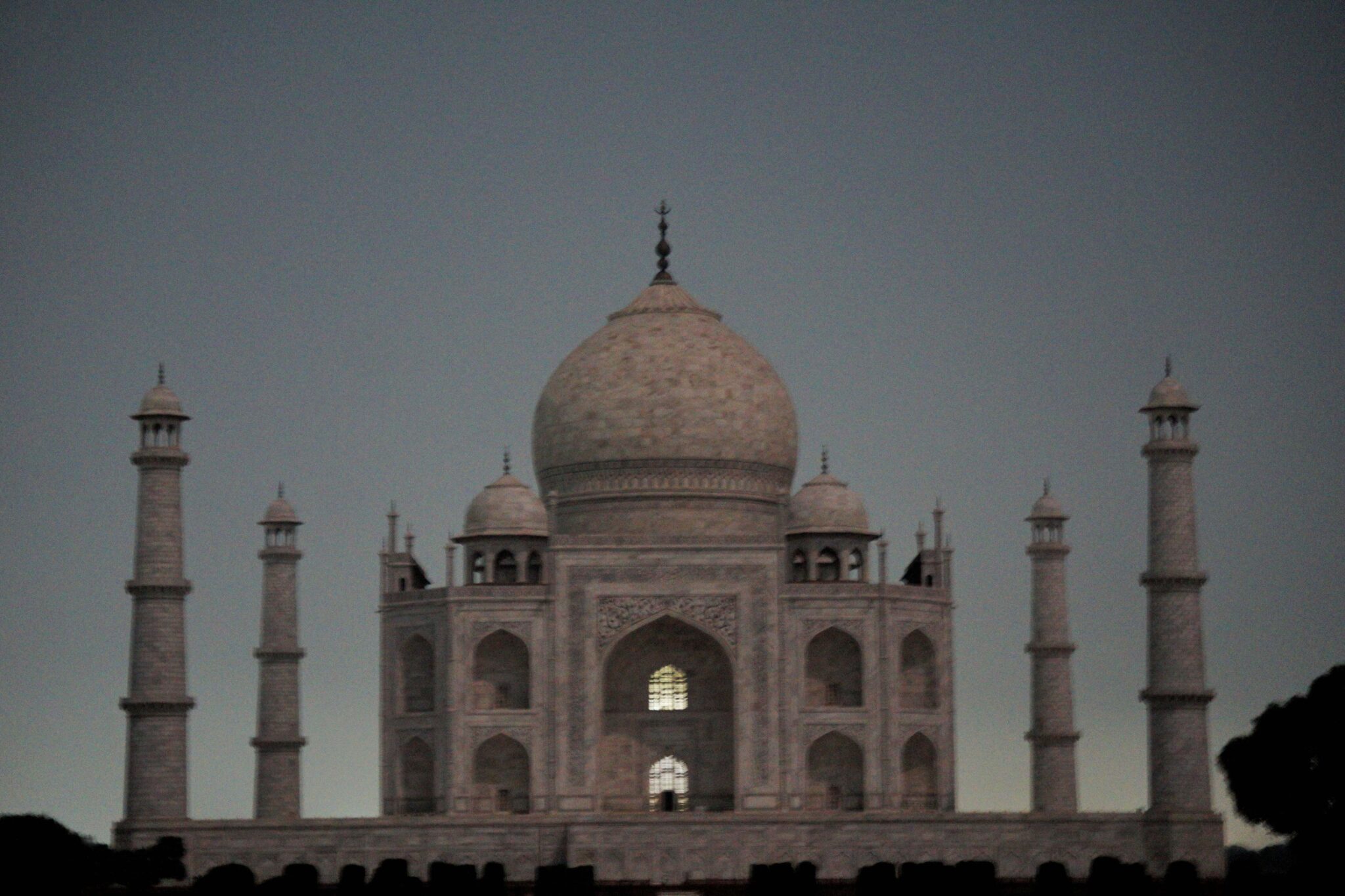
Taj Mahal at Night is one of the most exclusive and captivating ways to experience the timeless beauty of the Taj Mahal, where the monument glows softly under the moonlight and reveals a completely different atmosphere from its daytime appearance. While millions of visitors explore the monument during daylight hours, only a limited number of travellers get the opportunity to witness the Taj Mahal after sunset. The calm surroundings, the subtle glow of moonlight on white marble, and the controlled number of visitors create a peaceful and unforgettable experience.
Built in the 17th century by the Mughal emperor Shah Jahan in memory of his beloved wife Mumtaz Mahal, the Taj Mahal has long been admired for its architectural brilliance and emotional symbolism. Experiencing the monument at night adds a unique dimension to its beauty, allowing visitors to observe its elegance in a quieter and more intimate setting.
Why the Taj Mahal Looks Different at Night
The Taj Mahal is constructed from white Makrana marble, a material known for its ability to reflect and absorb light. During the day, sunlight highlights the intricate details of the monument such as floral carvings, pietra dura inlay wor, and the symmetry of its domes and minarets.
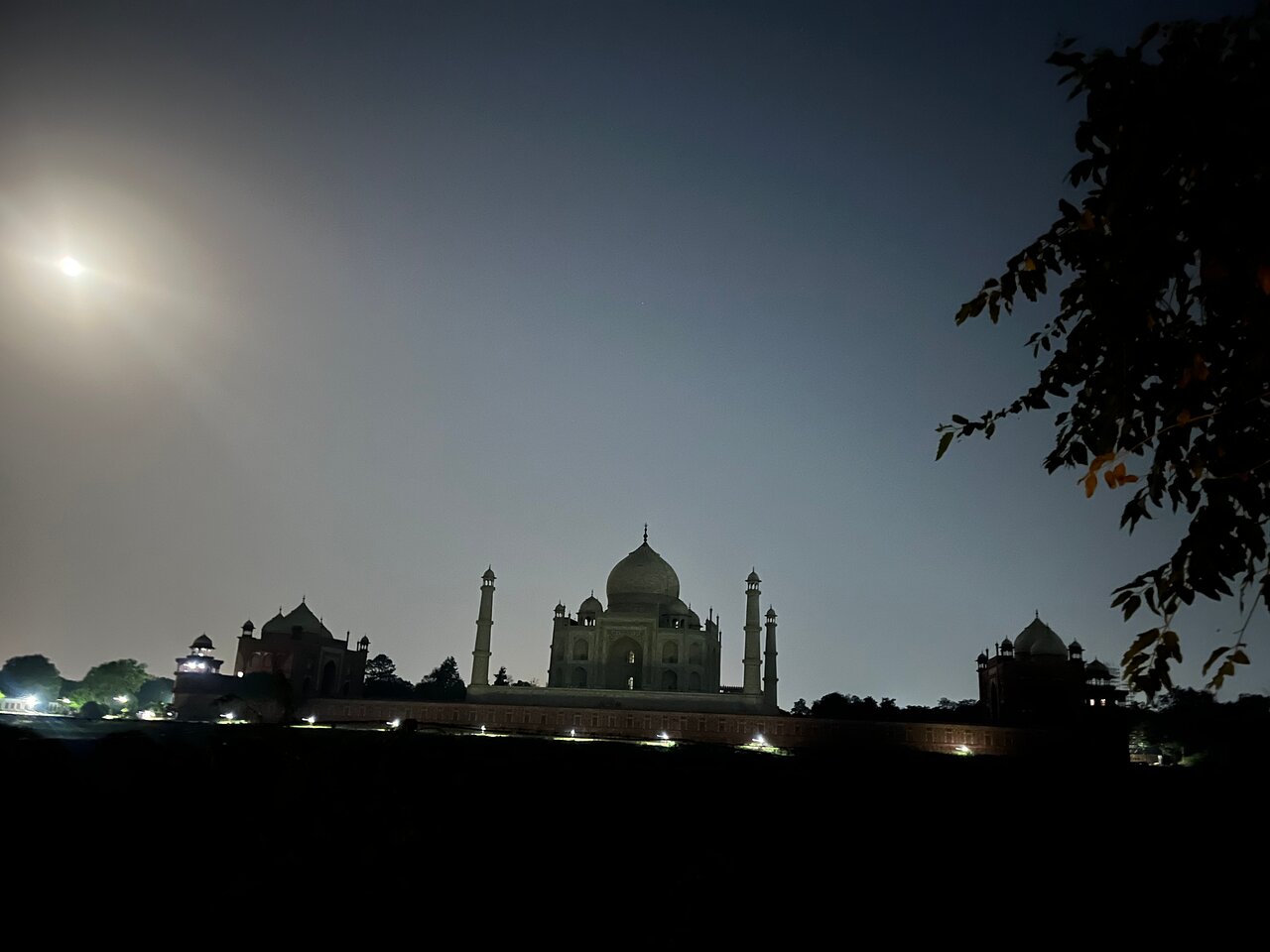
At night, the monument appears softer and more luminous. Moonlight reflects gently off the marble surface, giving the Taj Mahal a glowing appearance that can seem almost translucent.
Depending on the brightness of the moon and atmospheric conditions, the monument may appear in different shades such as silvery white, soft blue tones, pale golden hues.
This natural interaction between moonlight and marble creates a unique visual effect that cannot be experienced during the day.
The Significance of Experiencing the Taj Mahal at Night
Many historians and architectural experts believe that the Taj Mahal was designed to be admired under different lighting conditions. The monument’s proportions, symmetry, and smooth marble surfaces respond beautifully to changing natural light.
At night, the silhouette of the central dome and the four minarets stand out clearly against the sky. The quiet surroundings also allow visitors to focus on the monument’s grandeur without the large daytime crowds. The peaceful setting enhances the emotional story behind the Taj Mahal, which was built as a tribute to eternal love.
When You Can Visit the Taj Mahal at Night
Night viewing at the Taj Mahal is limited and carefully regulated to protect the monument and maintain security.
Visitors are allowed to enter the complex five nights each month, which include:
- The full moon night
- Two nights before the full moon
- Two nights after the full moon
Night viewing is not available on Fridays because the monument remains closed for regular prayers.
Taj Mahal Night Viewing Timings
Night viewing is arranged in eight batches each evening to control the number of visitors inside the complex.
Important details include:
- Around 50 visitors are allowed in each batch
- Each group is given approximately 30 minutes for viewing
- Visitors observe the monument from a designated viewing platform
Best Time to Experience Taj Mahal at Night
Although night viewing is available throughout the year during full moon periods, the experience is often best between October and March.
During these months:
- The weather is cooler and more comfortable
- The sky is usually clearer
- Moonlight reflections on the marble are more visible
A Rare Perspective of a World Wonder
A daytime visit to the Taj Mahal reveals its architectural brilliance and artistic craftsmanship. For travellers visiting Agra, it offers a rare opportunity to see one of the world’s most famous monuments in a calm and magical setting that very few people get to witness.