

For the global travel industry, the pursuit of destinations that balance accessibility with authenticity remains a constant focus. Tucked away in the Eastern Himalayas, the Silk Route in Sikkim stands out as a rare offering that seamlessly connects ancient history with untouched natural splendor. Once a vital corridor of exchange across Asia, this high-altitude route is now firmly established as a distinctive choice for offbeat travel in Sikkim, offering an exclusive alternative to more frequented Himalayan regions.
For the international travel trade, the Old Silk Route in India presents a compelling opportunity to enhance itineraries with high-value, experiential journeys that align with the growing demand for sustainable and culturally immersive travel.
The Legacy of the Ancient Silk Route
The Silk Route, spanning nearly 12,000 kilometers, connected China to the Mediterranean world through a vast network of land and maritime corridors.
Beyond commerce, it played a pivotal role in shaping global history:
- Facilitated trade in silk, spices, textiles, and precious metals
- Enabled the exchange of philosophies, art, and technology
- Acted as a key channel for the spread of Buddhism from India to Central and East Asia
Caravans traveling along these routes carried not only goods but also cultural narratives: monks, artisans, traders, and explorers who contributed to a shared transcontinental heritage.
The Silk Route through the Eastern Himalayas, including Sikkim, formed an important branch connecting Tibet with the Indian subcontinent, leaving behind influences still visible in local traditions and settlements.
Recognizing this deep historical significance, UNESCO has identified several cultural treasures along India’s ancient caravan trails linked to the Silk Route. These sites are currently on the tentative list of UNESCO World Heritage Sites, underscoring their global importance.
The Silk Route in India extended across key regions, including Bihar, Jammu and Kashmir, Maharashtra, Puducherry, Punjab, Tamil Nadu, and Uttar Pradesh/Uttarakhand, each contributing to this vast network of exchange.
Among the notable cultural sites connected to this legacy are:
- Arikamedu in Puducherry, an important ancient port settlement
- Excavated remains of Kaveripattinam in Tamil Nadu
- Ruins of Ancient Vaishali and Vikramshila University in Bihar
- Buddhist heritage sites such as Kushinagar, Kaushambi, Sravasti, and Ahichhatra in Uttar Pradesh
- Sanghol in Punjab, known for its ancient site and Buddhist stupa
- Harwan in Jammu and Kashmir, featuring monastery and stupa remains
- Indraprastha (Old Fort) in Delhi
- Burud Kot in Maharashtra
These sites collectively reflect the cultural, religious, and intellectual exchanges that once flowed along the Silk Route, reinforcing its role as a bridge between civilizations rather than merely a trade network.
Silk Route in Sikkim – Where History Meets Landscape
Unlike many historical routes that exist only in archives, the Silk Route in Sikkim remains a living corridor, where history is experienced through geography.
Traversing high-altitude passes and remote Himalayan villages, this route offers:
- A transition from dense forests to alpine terrain
- Strategic mountain passes historically used for trade
- Settlements shaped by Indo-Tibetan cultural exchange
The journey is not just scenic, it is deeply contextual, where each viewpoint and village carries echoes of its past.
Key Destinations Along the Silk Route
Zuluk
A remote mountain hamlet, Zuluk is known for its dramatic setting and proximity to the historic trade path. It serves as a base for exploring the region’s iconic landscapes.
Nathang Valley
Located at over 13,000 ft, this high-altitude valley is characterized by vast open terrain and seasonal transformations, from snow-covered expanses in winter to golden grasslands in autumn.
Kupup Lake
Situated near the Indo-China border, this uniquely shaped lake is among the highest in the region and remains frozen during winter.
Thambi Viewpoint
Offering sweeping views of the Eastern Himalayas, this viewpoint is one of the most photographed locations along the route.
Baba Mandir
A culturally significant site dedicated to an Indian soldier, reflecting both local belief systems and the region’s strategic importance.
Unique Experiences for the Experiential Traveler
To position Sikkim tour packages effectively to international clients, focus on the unique “bucket-list” moments that only this route can provide:
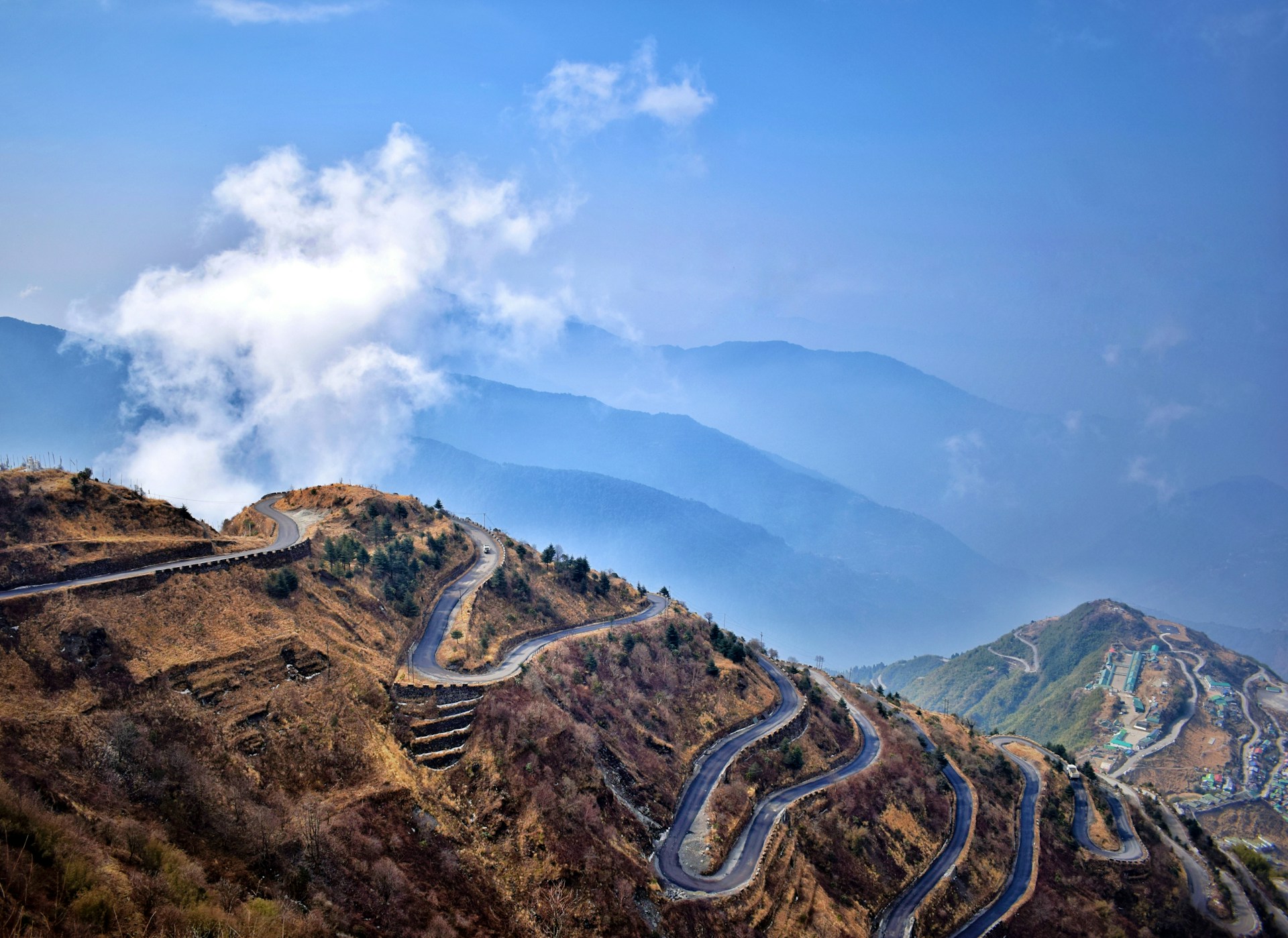
The Engineering Marvel: 32 Hairpin Bends
The Zig-Zag Road of Zuluk is a masterclass in mountain engineering. Travelers navigate 32 sharp hairpin bends that offer dizzying views and unparalleled photographic opportunities, especially when illuminated by the early morning sun.
Sunrise over the Kanchenjunga Range
While many view the Himalayas from afar, the Silk Route brings travelers face-to-face with the world’s third-highest peak. The panoramic vista from Thambi Viewpoint offers a “theatrical” sunrise that is often cited as a highlight of Northeast India travel.
Authentic Cultural Immersion
The region is home to the Bhutia, Lepcha, and Nepali communities, each maintaining distinct customs and attire. Staying in family-run homestays in villages like Phadamchen or Nathang allows travelers to hear “mountain stories,” taste local staples like sel roti and bamboo shoot pickles, and experience genuine Himalayan hospitality.
A Winter Wonderland
For clients seeking snow, the months of December through February transform the route into a magical landscape of frozen lakes and white-draped valleys, offering activities like sledding and snow hiking.
Why Silk Route Sikkim Stands Out
- Cultural Continuity: A living reflection of ancient transcontinental exchange
- Experiential Depth: Combines history, landscape, and local interaction
- Exclusivity: Limited access ensures a less commercialized experience
- Diverse Landscapes: From forests to high-altitude plateaus