

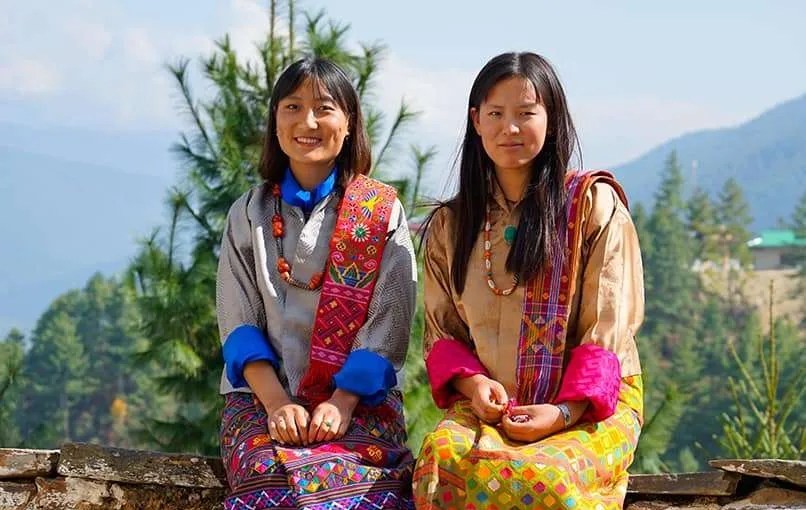
In most parts of the world, traditional clothing appears during festivals, ceremonies, or cultural events. In Bhutan, it is part of everyday life.
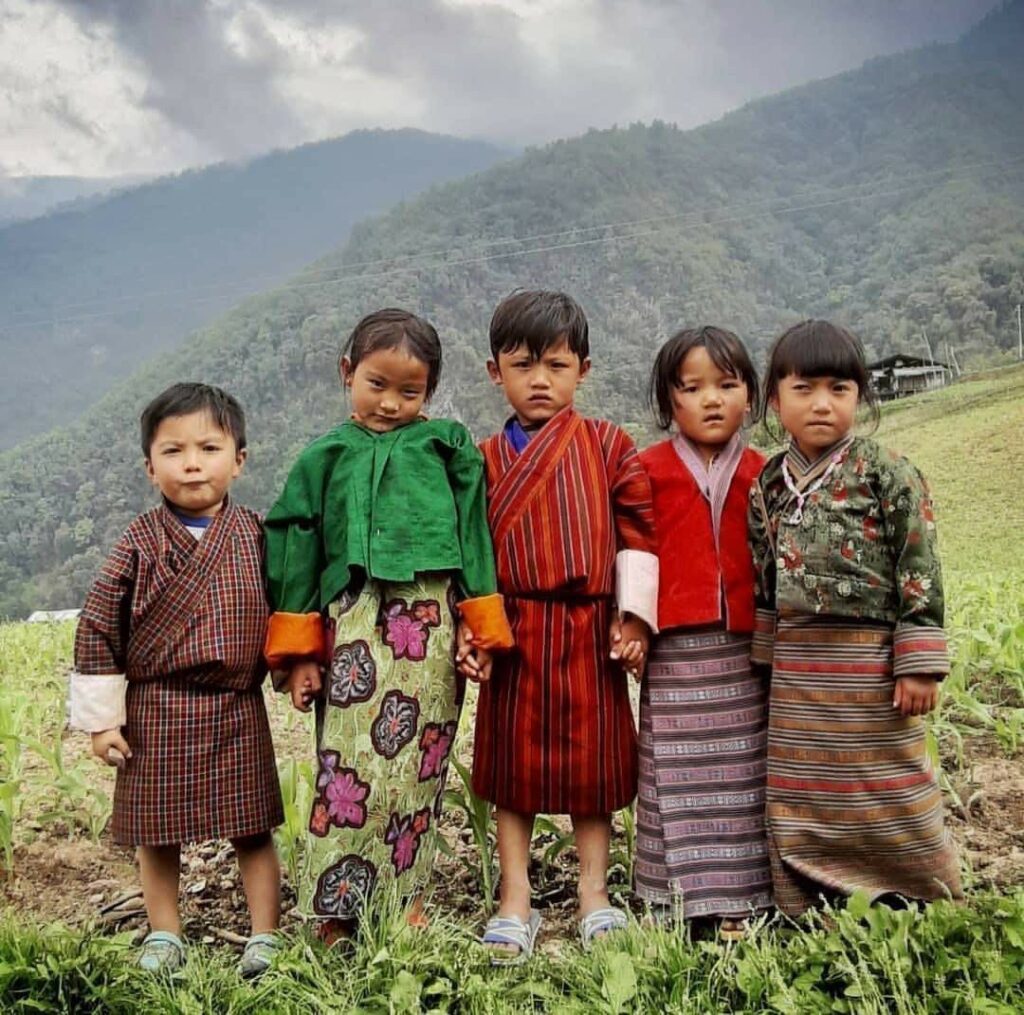
Students attend school in traditional attire. Government officials wear it to work. Visitors entering fortresses and temples often see an entire crowd dressed in national clothing.
Bhutan is one of the few countries where traditional dress is formally required in certain public spaces. Yet what surprises many travellers is that people do not wear it reluctantly. Instead, Bhutanese citizens wear their national dress with pride.
The garments are not seen as costumes from the past. They represent identity, heritage, and belonging.
The 17th Century Origin of Bhutan National Dress
Bhutan’s traditional clothing system was introduced in the 17th century by Zhabdrung Ngawang Namgyal. His vision was to unify the country through shared cultural practices.
One of the most visible ways to do that was through national dress.
Today, this tradition continues through Driglam Namzha, a code of etiquette that guides behaviour, dress, and social conduct in public institutions. Formalised in 1989, the code encourages Bhutanese citizens to maintain their cultural identity through everyday practices.
As a result, traditional clothing remains standard attire in schools, government offices, and official events across Bhutan.
The Gho: Traditional Dress for Bhutanese Men
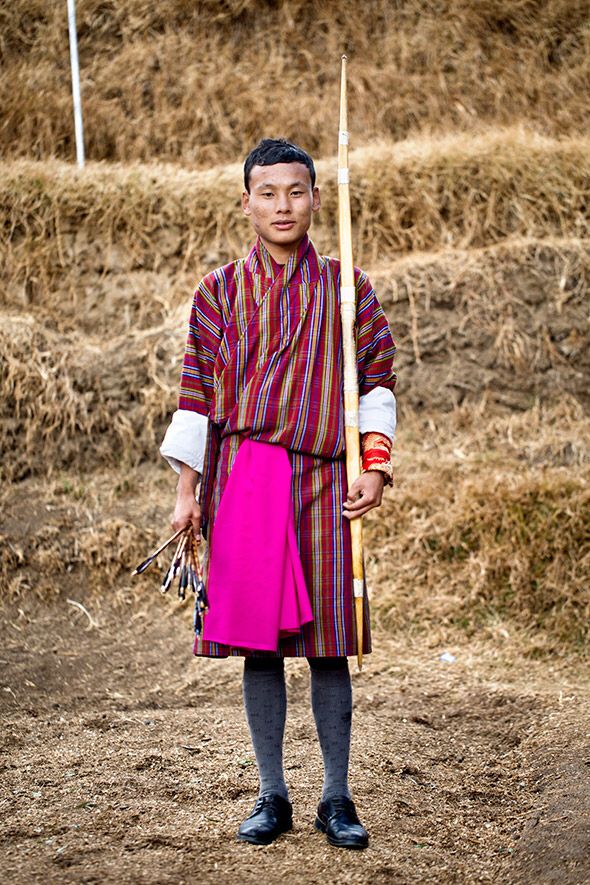
The Gho is the national dress worn by men in Bhutan. It is a knee-length robe tied at the waist with a woven belt called the Kera. When the belt is tightened, the fabric folds above the waist, creating a large pouch at the front.
Historically, this pouch served practical purposes. Men used it to carry bowls, betel nuts, or a dagger. In rural areas it could even hold a small child during travel. Today, it is more likely to hold everyday items such as wallets or phones.
Ghos usually feature plaid or striped woven patterns. Floral designs are traditionally avoided, while solid red and yellow fabrics are reserved for monks and members of the royal family.
Under the Gho, men wear the Tegu, a white inner jacket whose folded cuffs are visible at the wrists.
The Kira: Traditional Dress for Bhutanese Women
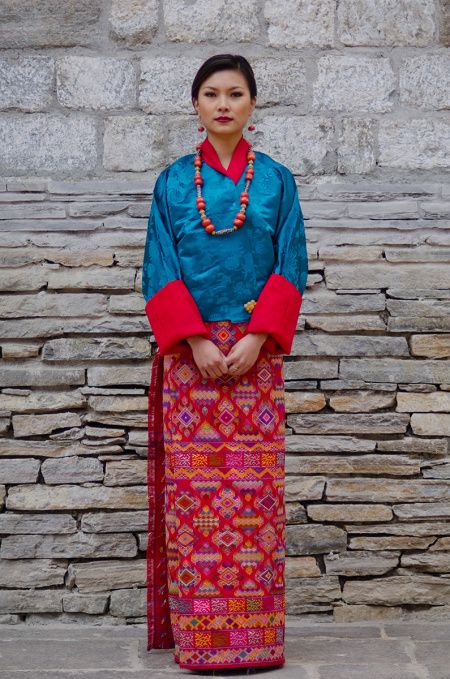
The Kira is the traditional attire worn by Bhutanese women.
It is an elegant ankle-length garment created from a long rectangular cloth wrapped around the body. The fabric is secured at the shoulders with decorative clasps known as Koma.
The Kira is worn with two additional layers. A light inner blouse called the Wonju forms the base layer, while a short jacket called the Toego is worn over the top.
Bhutanese textiles are known for their vibrant colours and intricate weaving techniques. For special occasions, women wear hand-woven silk Kiras that can take months to create. These garments reflect the country’s rich tradition of textile craftsmanship.
The Kabney: A Scarf That Reveals Rank
Traditional Bhutanese attire also communicates social identity.
Men wear a ceremonial silk scarf known as the Kabney during formal occasions. The colour of the Kabney indicates a person’s rank or position in society.
For example:
- Saffron is worn by the King and the Je Khenpo, the head abbot of Bhutan
- Orange is worn by ministers and members of the cabinet
- Green represents members of the judiciary
- Red is awarded to Dashos, individuals honoured by the monarchy
- White is worn by common citizens
This colour system allows people to recognise official roles immediately in public gatherings.
The Rachu: Women’s Ceremonial Scarf
Women wear the Rachu, which serves as the equivalent of the Kabney.
The Rachu is an embroidered silk scarf draped over the left shoulder during formal or respectful occasions. Women wear it when entering a Dzong, visiting a temple, or appearing before senior officials.
The scarf is typically vivid red with elaborate woven patterns. One important rule is that the Rachu should never touch the ground, as it represents respect and dignity.
More Than Clothing: A Living Cultural Tradition
Unlike many countries where traditional dress appears mainly during festivals, Bhutan has woven its national attire into daily life.
From schoolchildren to government leaders, the Gho and Kira remain visible expressions of identity. This practice reflects Bhutan’s national philosophy of Gross National Happiness, which places cultural preservation alongside economic development.
Every fold, colour, and hand-woven pattern carries generations of meaning.
Traditional clothing helps preserve Bhutan’s identity, heritage, and cultural pride. In Bhutan, getting dressed is more than a routine. It is a quiet expression of belonging.
In a rapidly changing world, Bhutan continues to keep its traditions visible through everyday life.